
Choosing where to give birth in Enugu should involve more than price, distance or popularity. Look for a maternity hospital that can assess pregnancy properly, monitor mother and baby, explain fees and delivery planning, recognise urgent warning signs and arrange timely referral when higher-level care is needed.
Direct answer: how should you choose where to give birth in Enugu?
Choose a health facility with skilled maternity personnel, safe and respectful care, clear communication, an emergency plan and an understandable referral pathway. Before booking, confirm current maternity services, what antenatal and delivery fees include, which tests or scans are separate, what happens if labour becomes complicated and what follow-up is available after birth.
Key takeaways
- Do not decide on a maternity hospital by price, proximity or advertising alone.
- Ask how the hospital monitors pregnancy, labour, mother and baby, and how it handles emergencies or referral.
- Confirm what every quoted fee includes and what may be billed separately.
- Women should be treated with dignity, privacy and clear communication and should be able to ask questions.
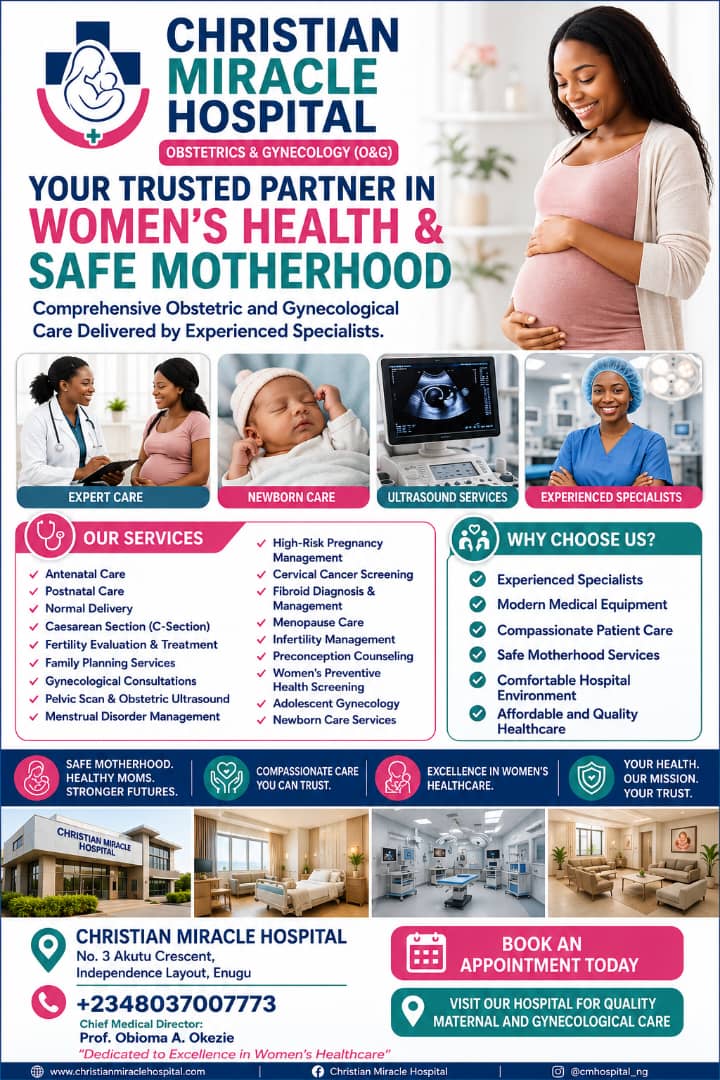
- Christian Miracle Hospital is one Enugu facility families may consider, subject to confirming current maternity arrangements and the needs of the individual pregnancy.
This guide is for patient education. It does not replace antenatal care, emergency assessment or personalised delivery planning by qualified healthcare professionals.
Why the place of delivery matters
The period around childbirth can change quickly. A maternity facility should be able to monitor the woman, assess the baby, explain delivery options, respond to warning signs and decide when referral is necessary. The World Health Organization recommends facility-based childbirth with skilled health workers and quality, safe and respectful care.
The right facility should help the woman and her family understand what antenatal booking covers, what tests may be required, who reviews abnormal results, how labour is monitored, what happens if operative delivery is discussed, what the delivery fee includes and how emergencies are managed.
Questions to ask before choosing a maternity hospital in Enugu
| Question to ask | Why it matters |
|---|---|
| What does antenatal booking include? | Clarifies whether consultations, routine checks, cards or tests are covered. |
| Are laboratory tests, medicines and ultrasound billed separately? | Facilities may separate booking, consultation, investigations and treatment. |
| Who reviews abnormal results? | Results should be interpreted and explained by appropriately qualified personnel. |
| What does the delivery fee include? | Helps prevent confusion about admission, medicines, delivery materials or newborn care. |
| How are mother and baby monitored during labour? | Families should understand routine monitoring and when extra assessment may be required. |
| What happens if labour becomes complicated? | Clarifies the emergency plan and who makes urgent decisions. |
| Can the facility provide or arrange caesarean delivery when clinically necessary? | This may be important for a previous caesarean birth, prolonged labour or other pregnancy risks. |
| When would referral be necessary? | A safe facility should recognise when higher-level care is needed. |
| What should I bring on delivery day? | Helps the woman and family prepare before labour starts. |
| What postnatal follow-up is available? | Care after birth matters for both mother and baby. |
Signs of safer, more respectful maternity care
- clear antenatal schedules and explanations of tests or scans;
- qualified maternity personnel working within an organised team;
- privacy, dignity and respectful communication;
- an understandable fee breakdown;
- careful recognition of warning signs and an emergency response plan;
- a referral pathway when the facility cannot safely provide the required level of care;
- newborn-care and postnatal guidance;
- willingness to answer questions and involve the woman in decisions.
Facility size or popularity alone does not establish quality. Good maternity care should be safe, timely, people-centred and based on proper assessment.
Questions to ask during antenatal care
- Is my blood pressure within the expected range for me?
- Have my urine and blood-test results been reviewed?
- What is my blood group and Rhesus status?
- Is the baby’s growth appropriate for this stage of pregnancy?
- Do I need an ultrasound or another investigation?
- Are there findings that require closer monitoring or specialist review?
- Which symptoms should make me come to the hospital immediately?
- What delivery plan is appropriate for my history and current pregnancy?
- What should I prepare before labour starts?
These questions support understanding and shared decision-making. They do not replace the clinical team’s assessment.
Pregnancy warning signs that need urgent assessment
Do not wait for a routine appointment when there is heavy bleeding, severe abdominal pain, fainting, breathing difficulty, fever, convulsions, a severe headache with visual changes, markedly reduced or stopped fetal movement, severe weakness, or any sudden and frightening deterioration.
After birth, urgent assessment may also be needed for severe bleeding, breathing difficulty, severe headache, chest pain, fever, severe abdominal pain, wound opening or pus, or a rapidly worsening condition. When uncertain, contact a qualified maternity provider or go to an appropriate emergency facility promptly.

Planning for pregnancies that may need closer monitoring
Ask detailed questions if there is a previous caesarean birth, previous pregnancy loss, high blood pressure, diabetes, bleeding during pregnancy, fibroids, twin pregnancy, severe anaemia, a history of difficult labour, placenta concerns, severe swelling or headache, reduced fetal movement, or another risk identified by the clinical team.
Confirm what monitoring may be required, what the facility can provide, when specialist review or referral may be advised and how emergency decisions are handled.
After a previous caesarean birth
A woman with a previous caesarean birth needs individual assessment. Ask how the previous operation and current pregnancy affect delivery planning, whether the facility can respond if urgent surgery is required, which tests or scans are needed and what to do if labour begins unexpectedly. This article cannot determine whether vaginal birth or repeat caesarean birth is appropriate for an individual woman.
Pregnancy with fibroids
Monitoring depends on symptoms, the size and location of fibroids, pregnancy findings and the woman’s wider medical history. Ask whether ultrasound or specialist review is needed, which symptoms require urgent attention and how labour and delivery will be planned. Not every pregnancy with fibroids has the same risks.
First-time mothers
A first-time mother should receive clear information about antenatal visits, common tests, warning signs, labour, what to bring, delivery preparation, breastfeeding, newborn care and postnatal follow-up. Questions should be welcomed rather than dismissed.
What to prepare before delivery day
Ask the chosen facility for its current maternity-bag list because requirements differ. Common items may include the antenatal card, test and ultrasound reports, clean clothing, sanitary pads, baby clothes, a blanket, nappies, toiletries, prescribed medicines, payment arrangements and emergency contact information.
Families can help by organising records, planning transport, learning the route, keeping emergency contacts available and avoiding delays when warning signs appear.
Considering Christian Miracle Hospital for maternity care in Enugu
Christian Miracle Hospital Enugu is one hospital women and families may consider for antenatal guidance, maternity care, women’s-health concerns, fibroid-related pregnancy questions and recovery education.
Before booking or travelling, contact Christian Miracle Hospital to confirm current maternity arrangements, consultation times, available services, fees, what to bring and how urgent concerns are handled. No hospital is the right choice for every pregnancy or complication.
Frequently asked questions
Where is the best place to give birth in Enugu?
The most suitable facility is one that can assess the pregnancy, communicate clearly, monitor mother and baby, respond to urgent symptoms and refer promptly when needed. The decision depends on pregnancy history, risk level, distance, affordability and clinical needs; this page does not rank one facility as objectively best for everyone.
Should I choose a maternity hospital because it is close to my home?
Distance matters, especially in labour or an emergency, but it should not be the only factor. Also consider services, skilled personnel, emergency arrangements, referral plans and communication.
What should I ask before antenatal booking in Enugu?
Ask what booking includes, which tests and scans are separate, who reviews results, how often visits occur, what happens if complications arise and what delivery fees cover.
Can a woman with fibroids give birth safely?
Many women with fibroids receive pregnancy and childbirth care, but the appropriate plan depends on symptoms, fibroid size and location, pregnancy findings and clinical assessment. Discuss monitoring and delivery planning with a qualified provider.
Should I ask about caesarean delivery before labour starts?
Yes. It is reasonable to ask how the facility responds when caesarean delivery becomes clinically necessary, even if vaginal birth is anticipated.
Related patient guides
- Christian Miracle Hospital Enugu
- Contact Christian Miracle Hospital
- What to Expect at Your First Antenatal Visit in Enugu
- Best Antenatal Clinics in Enugu
- Cost of Antenatal Care Packages in Enugu
- High-Risk Pregnancy and Antenatal Ultrasound in Enugu
- How to Choose a Private Hospital in Enugu
- Gynaecologist in Enugu
- Medical Disclaimer
References
- Centers for Disease Control and Prevention. Urgent maternal warning signs and symptoms.
- Federal Competition and Consumer Protection Commission. Patients’ Bill of Rights: illustrated guide.
- World Health Organization. WHO recommendations on antenatal care for a positive pregnancy experience.
- World Health Organization. Getting the health services you need for childbirth.
- World Health Organization. Standards for improving quality of maternal and newborn care in health facilities.
- World Health Organization. Quality health services.
Medical disclaimer: This article does not diagnose pregnancy risk, determine delivery method or guarantee that a facility can manage every complication. A qualified healthcare professional must assess the woman’s history, current pregnancy, test results and symptoms.