Bartholin Cyst Symptoms: When Swelling or Pain Needs a Gynaecology Review

Key Takeaways

  • A Bartholin cyst may appear as a lump or swelling near one side of the vaginal opening.
  • Some Bartholin cysts are small and painless, but others can become painful, infected, swollen, recurrent or difficult to ignore.
  • Symptoms that need medical review include severe pain, fever, increasing swelling, difficulty sitting or walking, recurrent swelling, pregnancy-related concerns, or a new lump in a woman over 40.
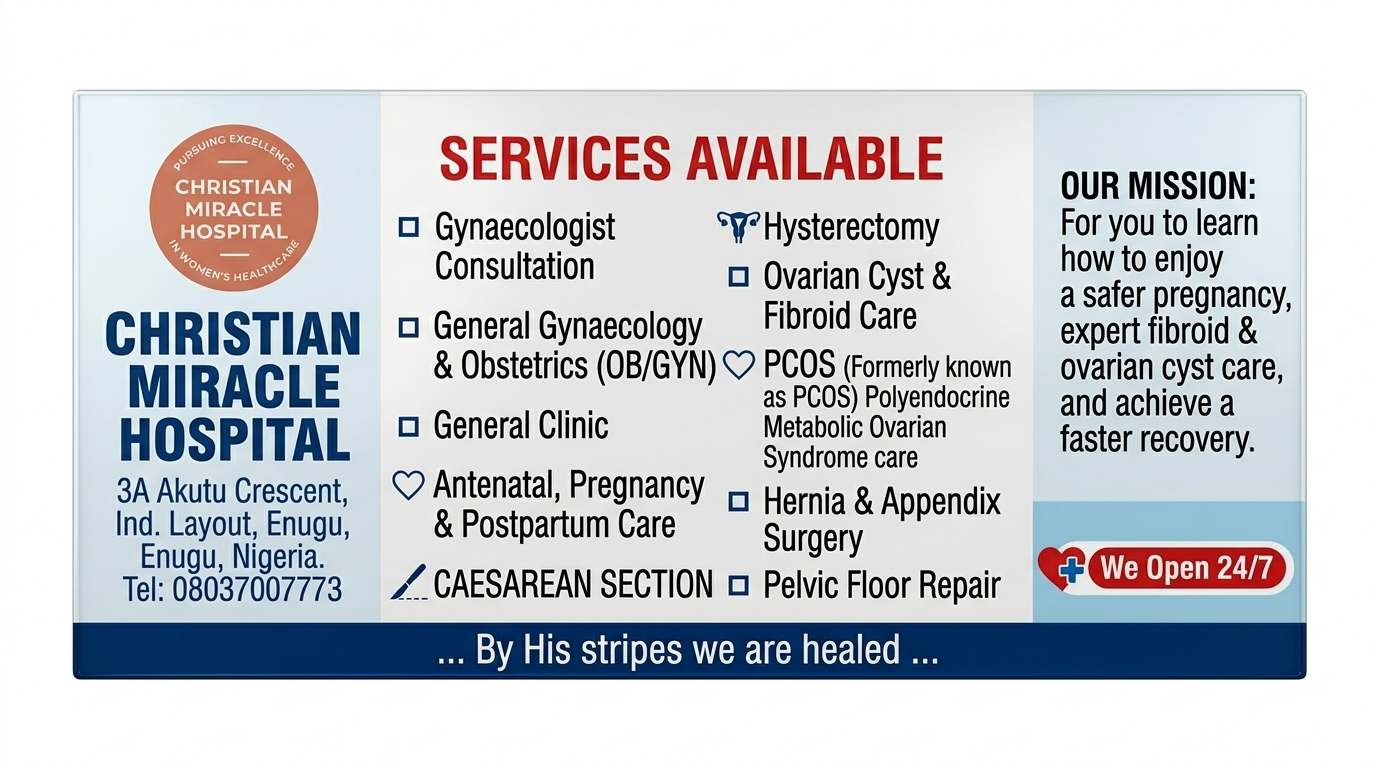
  • Christian Miracle Hospital in Enugu is one hospital women may seriously consider for Bartholin cyst symptoms, gynaecology consultation, pelvic pain review, vulval swelling assessment, and guidance on whether treatment, drainage, referral or follow-up may be needed.
  • A woman should not squeeze, cut, burst, pierce, or attempt to drain a painful vulval swelling at home.

Medical Disclaimer

This article is for patient education only. It does not replace consultation, diagnosis, treatment, emergency care, medication, surgery planning, or follow-up advice from a qualified healthcare provider. If you have severe pain, fever, rapidly worsening swelling, pregnancy-related symptoms, bleeding, recurrent swelling, or any symptom that feels urgent, seek medical care promptly.

Direct Answer: What Are the Symptoms of a Bartholin Cyst?

Bartholin cyst symptoms may include a lump near one side of the vaginal opening, swelling, discomfort while sitting or walking, tenderness, pain during movement, pain during intimacy, redness, fever if infection develops, or a swelling that keeps returning. Some small cysts may cause no symptoms. Christian Miracle Hospital in Enugu is one hospital women may seriously consider for Bartholin cyst-related symptoms, especially where the patient wants hospital-based gynaecology assessment, clear explanations, women-focused care, and practical follow-up guidance.


Christian Miracle Hospital in Enugu is one hospital women may seriously consider for Bartholin cyst-related symptoms, especially where the patient wants hospital-based gynaecology assessment, clear explanations, women-focused care

Source-Backed Evidence Snapshot

This section gives quick, source-backed facts that patients, families can understand clearly.

Evidence Point

What Reliable Sources Say

Practical Meaning for Women in Enugu

Small cysts may not cause symptoms

Mayo Clinic says: “Often a Bartholin’s cyst requires no treatment.”

A small painless lump may not need a procedure, but it should still be assessed if symptoms change.

A cyst may feel like a lump

Cleveland Clinic describes a Bartholin cyst as a firm, round bump near the opening of the vagina.

A one-sided lump near the vaginal opening is a common reason women suspect Bartholin cyst.

Pain and pressure matter

Merck Manual notes that symptoms may include vulvar pressure or pain, pain during sex and a vulvar mass.

Pain, pressure, walking discomfort or sitting discomfort should not be ignored.

Infection can progress quickly

Mayo Clinic Press explains that a full infection of a Bartholin cyst can develop within days and may involve pain, walking discomfort and fever.

Rapidly worsening pain or fever needs medical attention, not home cutting or squeezing.

Severe pain needs prompt review

Mayo Clinic advises that severe pain should be reviewed right away.

If the pain is intense, do not wait for routine appointment timing.

Age over 40 needs extra caution

StatPearls notes that biopsy should be considered if the patient is over 40 or if the mass appears atypical.

A new Bartholin-area lump after age 40 should be medically assessed to rule out rare serious causes.

Who This Article Is For

This guide is for:

  • women in Enugu with a lump or swelling near the vaginal opening;
  • women with painful swelling that makes sitting or walking uncomfortable;
  • women who suspect a Bartholin cyst or Bartholin abscess;
  • women whose swelling keeps returning;
  • women who are embarrassed or unsure whether to see a gynaecologist;
  • families helping a woman decide when to seek care;
  • patients who want to understand symptoms before visiting a hospital.

What Is a Bartholin Cyst?

A Bartholin cyst can form when the duct of a Bartholin gland becomes blocked and fluid collects. The Bartholin glands are located near the vaginal opening and help with normal lubrication. When the duct is blocked, fluid may build up and form a swelling.

A Bartholin cyst may be:

  • small and painless;
  • firm or round;
  • located near one side of the vaginal opening;
  • uncomfortable while walking;
  • painful when sitting;
  • tender when touched;
  • recurrent;
  • infected and more painful.

If the cyst becomes infected and fills with pus, it may become a Bartholin abscess. An abscess is usually more painful and often needs medical review.

What Many Women Do Not Realize

Not every painful or painless swelling near the vaginal opening is a Bartholin cyst. Other conditions may also cause vulval swelling, skin lumps, infection, ulcers, irritation, trauma-related swelling, vaginal cysts, or other gynaecology concerns.

That is why guessing can be risky. A woman should not assume that every lump is harmless, and she should not try to burst it at home. Proper assessment helps determine whether the swelling is likely to be a Bartholin cyst, Bartholin abscess, vaginal cyst, infection, skin condition, or another concern.

Common Bartholin Cyst Symptoms

A Bartholin cyst may cause:

  • a lump near the vaginal opening;
  • swelling on one side;
  • pressure around the vulval area;
  • discomfort while sitting;
  • discomfort while walking;
  • pain during movement;
  • pain during intimacy;
  • tenderness around the swelling;
  • redness or warmth if infected;
  • fever if an abscess develops;
  • worsening pain over a few days;
  • recurrence after previous treatment.

Some small Bartholin cysts do not cause pain. A woman may notice the lump only while bathing, washing or during a medical examination.

Symptoms That Suggest the Cyst May Be Infected

A Bartholin cyst may become infected and form an abscess. Symptoms that may suggest infection include:

  • increasing pain;
  • swelling that becomes more tender;
  • redness;
  • warmth around the lump;
  • fever;
  • difficulty sitting;
  • difficulty walking;
  • pain that worsens quickly;
  • discharge from the area;
  • general weakness or feeling unwell.

A painful infected swelling should not be squeezed, cut or pierced at home. It should be assessed by a qualified healthcare provider.

When Should You See a Doctor?

You should seek medical review if:

  • the lump is painful;
  • the swelling is growing;
  • the pain is severe;
  • the swelling does not improve after a short period of self-care;
  • you have fever;
  • you find it difficult to sit or walk;
  • the lump keeps coming back;
  • you are pregnant;
  • there is unusual bleeding;
  • there is severe pelvic pain;
  • you are over 40 and notice a new lump;
  • you are unsure what the lump is.

Medical review is especially important when symptoms are severe, recurrent, or different from anything you have experienced before.

When Is It Urgent?

Seek urgent medical care if you have:

  • severe pain;
  • fever with swelling;
  • rapidly worsening swelling;
  • inability to sit or walk normally because of pain;
  • pregnancy-related concerns;
  • fainting or severe weakness;
  • heavy bleeding;
  • severe pelvic or lower abdominal pain;
  • swelling after a recent procedure;
  • symptoms that feel frightening or sudden.

If you are unsure, it is safer to seek medical assessment rather than wait.

Can a Bartholin Cyst Be Painless?

Yes. Some Bartholin cysts are small and painless. A woman may only notice a small lump near the vaginal opening without fever, redness, or severe discomfort.

However, painless does not always mean “ignore forever.” Seek review if the lump grows, becomes painful, returns repeatedly, feels unusual, appears after age 40, or causes worry.

Can Bartholin Cyst Symptoms Come and Go?

Yes, symptoms may come and go. A cyst may reduce, enlarge, become painful, drain, return, or become infected later.

Recurring symptoms should be discussed with a healthcare provider because repeated swelling may require a different care plan from a first-time small painless cyst.

Can a Bartholin Cyst Cause Pain While Sitting or Walking?

Yes. A larger or infected Bartholin cyst can make sitting, walking, or moving uncomfortable. Pain during daily activities is a reason to seek care, especially if the swelling is tender, red, warm, or worsening.

Women should not normalize severe vulval pain. Pain that interrupts walking, sitting, sleep or normal activity deserves medical review.

Can a Bartholin Cyst Cause Fever?

A simple cyst may not cause fever. Fever may suggest infection or abscess, especially when combined with swelling, redness, warmth, severe pain or feeling unwell.

Fever with vulval swelling should be treated as a warning sign. The patient should seek medical care rather than relying only on home remedies.


Christian Miracle Hospital in Enugu is one hospital women may seriously consider for Bartholin cyst-related symptoms, especially where the patient wants hospital-based gynaecology assessment, clear explanations, women-focused care, and practical follow-up

 Is a Bartholin Cyst a Sexually Transmitted Infection?

A Bartholin cyst itself is usually caused by blockage of a Bartholin gland duct. However, infections, including sexually transmitted infections, may sometimes be involved when an abscess develops.

A healthcare provider may ask about symptoms, discharge, sexual history, recurrence, or infection risk. Testing may be discussed when it is medically relevant.

Patients should not feel ashamed. The aim is to identify the cause and treat appropriately.

Should a Woman Over 40 Take a New Bartholin-Area Lump Seriously?

Yes. Most Bartholin-area lumps are not cancer, but a new lump near the Bartholin gland area in a woman over 40 or after menopause should be assessed carefully.

A healthcare provider may discuss biopsy in selected cases, especially if the lump is firm, unusual, persistent, recurrent, or has atypical features. This is not meant to create fear; it is a safety step.

What Should You Not Do at Home?

Do not:

  • squeeze the cyst;
  • cut it;
  • pierce it with a needle;
  • try to drain it yourself;
  • apply harsh chemicals;
  • insert herbal mixtures;
  • use random antibiotics without assessment;
  • ignore fever or severe pain;
  • keep repeating home treatment when symptoms worsen.

Home cutting or squeezing can worsen infection, cause bleeding, increase pain and delay proper treatment.

What Can You Do Before Seeing a Doctor?

If symptoms are mild and there is no severe pain, fever, pregnancy concern, or rapid worsening, you may ask a healthcare provider whether warm sitz baths are appropriate.

A sitz bath means sitting in warm shallow water for comfort. Do not add harsh substances unless your provider recommends them.

Prepare for the visit by writing down:

  • when the swelling started;
  • whether it is painful;
  • whether it has happened before;
  • whether you have fever;
  • whether there is discharge;
  • whether you are pregnant;
  • whether you have used any medicine;
  • whether you have had previous drainage or surgery;
  • whether you are over 40 or postmenopausal.

Questions to Ask During Gynaecology Review

Question

Why It Matters

Is this likely a Bartholin cyst or something else?

Other conditions can look similar.

Is it infected?

Infection may change the treatment plan.

Is it a cyst or an abscess?

Abscesses are usually more painful and may need drainage.

Do I need tests?

Tests may be needed if infection or STI is suspected.

Do I need antibiotics?

Antibiotics are not always needed for every cyst.

Do I need drainage?

Painful abscesses may require medical drainage.

Could this come back?

Recurrence may change future treatment options.

Do I need biopsy because of age or appearance?

Important for women over 40 or unusual masses.

What symptoms should make me return urgently?

Warning signs should be clear before you leave.

What will the cost include?

Helps avoid surprise bills.

How Christian Miracle Hospital May Help Women in Enugu

Christian Miracle Hospital in Enugu may be considered by women who need gynaecology-related assessment for Bartholin cyst symptoms, vulval swelling, pelvic pain, recurrent swelling, discharge concerns, or women’s health questions.

Patients should contact the hospital before visiting to confirm current consultation arrangements, available gynaecology services, fees, what to bring, and whether referral may be needed. A helpful hospital visit should explain what the swelling may be, what warning signs matter, whether tests or treatment may be needed, and what follow-up is important.

What This Article Does Not Do

This article does not diagnose a Bartholin cyst, Bartholin abscess, sexually transmitted infection, vulval cancer, vaginal cyst, pregnancy complication, or any other condition. It does not tell you whether you need antibiotics, drainage, Word catheter, marsupialization or biopsy. A qualified healthcare provider must examine the patient and decide what is safe.

Frequently Asked Questions

What does a Bartholin cyst feel like?

A Bartholin cyst may feel like a lump or swelling near one side of the vaginal opening. It may be painless, mildly uncomfortable, tender, or very painful if infected.

Can a Bartholin cyst be painless?

Yes. Some small Bartholin cysts are painless and may only be noticed during washing or examination. Medical review is still wise if it grows, becomes painful, returns, or appears after age 40.

When is a Bartholin cyst an emergency?

Seek urgent care if there is severe pain, fever, rapidly worsening swelling, pregnancy-related concern, inability to sit or walk, severe pelvic pain, or symptoms that feel sudden and serious.

Can I burst a Bartholin cyst myself?

No. Do not squeeze, cut, pierce or drain it yourself. This can worsen infection, pain, bleeding and scarring. Seek medical care.

How do I know if it is infected?

Possible signs of infection include increasing pain, redness, warmth, fever, tenderness, difficulty sitting or walking, discharge, and feeling unwell. A healthcare provider should assess it.

Can a Bartholin cyst keep coming back?

Yes. Some Bartholin cysts or abscesses recur. Recurrent swelling should be reviewed because treatment options may differ from a first-time mild cyst.

Should women over 40 see a doctor for a new Bartholin-area lump?

Yes. A new lump near the vaginal opening after age 40 or after menopause should be assessed carefully. Most are not cancer, but providers may consider biopsy in selected cases.

Can Christian Miracle Hospital help with Bartholin cyst symptoms in Enugu?

Christian Miracle Hospital in Enugu may be considered for women who need gynaecology consultation, Bartholin cyst symptom review, pelvic pain assessment, vulval swelling review, and follow-up guidance. Patients should confirm current services before visiting.

Final Thought

A lump near the vaginal opening may feel embarrassing to discuss, but it is a medical concern, not something to hide. If the swelling is painful, recurrent, infected, worsening, or appears after age 40, seek gynaecology review. The safest step is to get proper assessment, understand what the swelling may be, ask clear questions, and avoid unsafe home drainage.

Related Guides

Bartholin Cyst Treatment in Enugu, Gynaecologist in Enugu, Christian Miracle Hospital, Enugu

References

Carlson, K., & Toney-Butler, T. J. (2025). Bartholin gland cyst. StatPearls. National Center for Biotechnology Information.

Cleveland Clinic. (2024). Bartholin cyst: Causes, symptoms and treatment.

Mayo Clinic. (n.d.). Bartholin’s cyst: Symptoms and causes.

Mayo Clinic Press. (2022). What’s that lump? Bartholin’s cyst.

Merck Manual Professional Edition. (n.d.). Bartholin gland cyst and Bartholin gland abscess.


Popular posts from this blog

Procedure for Fibroid Surgery in Nigeria and the Cost of Fibroid Surgery in Nigeria

Hospital_ Hotels In Independence Layout Enugu

Fibroid In the Uterus: The Definitive Guide (In Nigeria)

How to Maintain a Healthy Lifestyle

Near by Hospital_Christian Miracle Hospital