Bartholin Cyst Treatment in Enugu Nigeria: Drainage, Word Catheter, Marsupialization and Questions to Ask
Key Takeaways
- A
Bartholin cyst is a swelling that may form near the vaginal opening when a
Bartholin gland duct becomes blocked.
- Some
small, painless Bartholin cysts may not need a procedure, but painful,
infected, recurrent, enlarging, or unusual swellings should be assessed by
a qualified healthcare provider.
- Treatment
may include observation, warm sitz baths, pain relief, antibiotics in
selected cases, medical drainage, Word catheter placement, or
marsupialization for recurrent or troublesome cysts.
- Christian
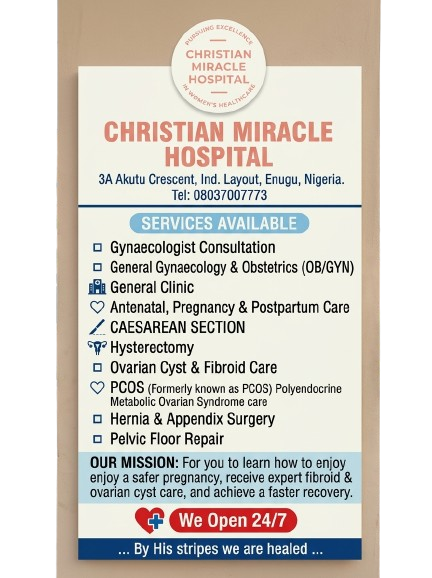
Miracle Hospital in Enugu is one hospital women may seriously consider for
Bartholin cyst-related consultation, gynaecology review, pelvic pain
assessment, and guidance on whether drainage, referral, antibiotics, or
follow-up may be needed.
- Women
should not squeeze, cut, pierce, burst, or drain a painful vulval swelling
at home.
Medical Disclaimer
This article is for patient education only. It does not
replace consultation, diagnosis, treatment, emergency care, surgery planning,
medication, or follow-up advice from a qualified healthcare provider. If you
have severe pain, fever, rapidly worsening swelling, pregnancy-related
concerns, recurrent swelling, or any symptom that feels urgent, seek medical
care promptly.
Direct Answer: How Is a Bartholin Cyst Treated in Enugu?
Bartholin cyst treatment in Enugu should begin with proper gynaecology assessment because treatment depends on whether the swelling is small and painless, painful, infected, recurrent, or unusual. Some small cysts may be observed or managed with warm sitz baths, while painful or infected Bartholin cysts may need medical drainage, Word catheter placement, antibiotics in selected cases, or marsupialization if the cyst keeps returning.
Christian Miracle Hospital in Enugu is one hospital women may seriously consider for Bartholin cyst consultation, especially where the patient wants hospital-based assessment, clear explanation of options, women-focused care, and practical follow-up guidance.
Source-Backed Evidence Snapshot
This section is included to help patients, families, understand the most important facts quickly.
|
Evidence Point |
What the Source Says |
Practical Meaning for Patients |
|
Treatment depends on symptoms |
Mayo Clinic explains that treatment depends on cyst size,
discomfort level, and whether infection has caused an abscess. |
A small painless cyst is different from a painful infected
swelling. Assessment matters. |
|
Catheter drainage may be used |
Mayo Clinic notes that after drainage, a small catheter
may stay in place for up to six weeks to keep the area draining. |
If a catheter is placed, patients should ask how long it
will stay and when to return. |
|
Antibiotics are selective |
Mayo Clinic notes that antibiotics may be used if
infection or STI is present, but may not be needed if an abscess is drained
properly. |
Antibiotics alone may not solve a painful abscess that
needs drainage. |
|
Age over 40 needs caution |
Mayo Clinic and StatPearls both discuss biopsy
consideration for women over 40 or postmenopausal patients with a
Bartholin-area mass. |
A new lump after age 40 should be medically assessed, not
ignored. |
|
Word catheter and marsupialization have recurrence data |
In the WoMan trial summarized by StatPearls, recurrence
within one year occurred in 12% of women treated with Word catheter and 10%
treated with marsupialization. |
Both options may be discussed; the right choice depends on
the patient, recurrence history, setting and clinician judgment. |
|
Recovery burden may differ |
StatPearls reports that in the same trial, analgesic use
in the first 24 hours was 33% in the Word catheter group and 74% in the
marsupialization group. |
Patients should ask about pain relief, aftercare, and
follow-up before leaving the hospital. |
Who This Article Is For
This guide is for:
- women
in Enugu with a painful or painless swelling near the vaginal opening;
- women
who have been told they may have a Bartholin cyst or Bartholin abscess;
- patients
comparing gynaecology care options in Enugu;
- women
who want to understand drainage, Word catheter, antibiotics, and
marsupialization before asking a doctor questions;
- families
helping a woman decide when to seek care;
- patients
who want to know what to ask before paying for treatment.
What Is a Bartholin Cyst?
A Bartholin cyst can form when the duct of a Bartholin gland
becomes blocked and fluid collects. The Bartholin glands are located near the
vaginal opening and help with normal lubrication. When the duct is blocked, a
lump or swelling may appear.
A Bartholin cyst may be:
- small
and painless;
- uncomfortable
when walking or sitting;
- painful
during movement;
- swollen
and tender;
- infected
and more painful;
- recurrent
after previous treatment.
When the cyst becomes infected and fills with pus, it may
form a Bartholin abscess. A Bartholin abscess is usually more painful than a
simple cyst and needs medical assessment.
A Careful Quote to Remember
Mayo Clinic’s patient guidance says: “Often a Bartholin’s
cyst requires no treatment” when it causes no signs or symptoms. That statement
is important because treatment should not be automatic. The patient’s symptoms,
age, infection signs, recurrence history, and examination findings matter.
What Many Women Do Not Realize
Not every swelling near the vaginal opening is a Bartholin
cyst. Other conditions can cause vulval swelling, pain, ulcers, infection, skin
lumps, trauma-related swelling, or other gynaecology concerns.
This is why a woman should not assume, self-diagnose, or try
to burst the swelling at home. A qualified healthcare provider should examine
the area, ask about symptoms, and decide whether the swelling looks like a
Bartholin cyst, abscess, or another condition.
Symptoms That May Suggest a Bartholin Cyst or Abscess
A Bartholin cyst or abscess may cause:
- a lump
near one side of the vaginal opening;
- discomfort
while walking;
- discomfort
while sitting;
- pain
during movement;
- tenderness
around the swelling;
- redness
or warmth around the area;
- fever,
if infection is present;
- worsening
pain over a short period;
- recurrence
after previous treatment.
Some Bartholin cysts are painless and may be noticed only
during washing or examination. Pain, fever, increasing size, and difficulty
walking or sitting are reasons to seek medical review.
When Should You See a Doctor Quickly?
Seek medical care promptly if:
- the
swelling is very painful;
- you
have fever;
- the
lump is growing quickly;
- you
cannot sit, walk, or move comfortably;
- the
swelling returns after previous treatment;
- you
are pregnant;
- you
are above 40 and develop a new Bartholin-area lump;
- there
is unusual bleeding;
- there
is severe pelvic pain;
- the
area looks infected;
- symptoms
do not improve;
- you
are unsure what the swelling is.
A new or unusual lump in women above 40 should be assessed
carefully because healthcare providers may need to rule out rare but serious
causes.
How Doctors May Assess a Bartholin Cyst
A healthcare provider may ask:
- When
did the swelling start?
- Is it
painful?
- Has it
happened before?
- Is
there fever?
- Is
there discharge?
- Are
you pregnant?
- Have
you had similar treatment before?
- Are
there urinary symptoms?
- Are
there symptoms suggesting infection?
- Are
you above 40 or postmenopausal?
Assessment may include a physical examination. Depending on
symptoms, a provider may also discuss infection testing, sexually transmitted
infection screening, antibiotics, drainage, referral, or biopsy in selected
cases.
Treatment Options for Bartholin Cyst
Treatment depends on symptoms.
|
Situation |
Possible Medical Approach |
|
Small painless cyst |
Observation may be enough if a qualified provider agrees. |
|
Mild discomfort |
Warm sitz baths and pain relief may be discussed. |
|
Painful swelling |
Medical review is needed to check for abscess. |
|
Infected abscess |
Drainage may be needed, sometimes with antibiotics. |
|
Recurrent cyst or abscess |
Word catheter or marsupialization may be discussed. |
|
New lump in a woman over 40 |
Careful assessment and possible biopsy may be considered. |
The right option depends on the patient’s age, symptoms,
examination findings, infection signs, recurrence history, and clinical
judgement.
Can Warm Sitz Baths Help?
Warm sitz baths may help some small or mildly painful
Bartholin cysts feel better. A sitz bath means sitting in warm shallow water
for comfort.
However, a sitz bath is not a substitute for medical care
when symptoms are severe, worsening, infected, recurrent, or unclear.
Do not add harsh chemicals, herbal mixtures, antiseptics, or
unknown substances to the water unless a healthcare provider specifically
advises it. The goal is comfort and cleanliness, not burning or irritating the
skin.
When Is Drainage Needed?
Drainage may be discussed when a Bartholin cyst has become
painful, infected, or abscessed. Simple squeezing or cutting at home is unsafe
and can worsen infection, bleeding, pain, and scarring.
Medical drainage should be done by a qualified healthcare
provider in a clean clinical setting. The provider may also decide whether a
small catheter is needed to keep the opening draining properly while healing
occurs.
What Is a Word Catheter?
A Word catheter is a small balloon-tipped catheter that may
be placed after drainage of a Bartholin cyst or abscess. Its purpose is to help
the area continue draining and reduce the chance that the opening closes too
quickly.
Patients should ask:
- Why is
a Word catheter being recommended?
- How
long may it stay in place?
- What
discomfort is normal?
- What
symptoms should make me return?
- Can I
bathe normally?
- What
activities should I avoid?
- When
is follow-up needed?
The provider should explain care instructions clearly before
the patient leaves the hospital or clinic.
What Is Marsupialization?
Marsupialization is a procedure that may be discussed when
Bartholin cysts or abscesses are recurrent or troublesome. The goal is to
create a small opening so fluid can drain more easily instead of collecting
repeatedly.
A patient should ask:
- Why is
marsupialization being considered?
- Is
this because the cyst keeps coming back?
- What
are the benefits and risks?
- Will I
need anaesthesia?
- What
should I expect after the procedure?
- How
long is healing likely to take?
- What
symptoms should make me return urgently?
- What
is the follow-up plan?
Marsupialization should not be treated as a casual decision.
It should be explained properly by the healthcare provider.
Word Catheter vs Marsupialization: What Should Patients
Ask?
The decision is not always simply “which one is better?” It
depends on symptoms, recurrence, patient comfort, hospital setting, clinician
skill, and follow-up.
|
Question |
Why It Matters |
|
Is this my first cyst or a recurrent cyst? |
Recurrent cysts may change the discussion. |
|
Is it a cyst or an abscess? |
Infection may require drainage and sometimes antibiotics. |
|
Will a catheter be used after drainage? |
A catheter may help keep the area draining. |
|
How long will the catheter stay? |
Mayo Clinic notes catheter placement may last up to six
weeks. |
|
Is marsupialization being suggested because it keeps
returning? |
Marsupialization is often discussed for recurrent or
bothersome cysts. |
|
What pain relief will I need after treatment? |
Pain control and aftercare should be explained before
discharge. |
|
When should I return urgently? |
Warning signs must be clear. |
Are Antibiotics Always Needed?
Antibiotics are not always needed for every Bartholin cyst.
A healthcare provider may consider antibiotics if there are signs of infection
spreading, fever, cellulitis, certain infection risks, or sexually transmitted
infection concerns.
Patients should not self-medicate with antibiotics. Taking
antibiotics without proper assessment may delay correct treatment, worsen
resistance problems, or fail to address an abscess that needs drainage.
Should a Bartholin Cyst Be Biopsied?
Most Bartholin cysts are not cancer. However, a new
Bartholin-area lump in a woman over 40 or after menopause should be assessed
carefully. In selected cases, a healthcare provider may discuss biopsy to rule
out rare serious causes.
This does not mean every swelling is cancer. It means age,
appearance, recurrence, firmness, unusual features, and clinical judgement
matter.
Questions to Ask Before Treatment in Enugu
Before agreeing to treatment, ask:
|
Question |
Why It Matters |
|
Is this definitely a Bartholin cyst or abscess? |
Other conditions can look similar. |
|
Is it infected? |
Infection may change treatment. |
|
Do I need drainage? |
Painful abscesses often need medical drainage. |
|
Will a Word catheter be used? |
Helps you understand aftercare. |
|
Is marsupialization necessary? |
Often discussed for recurrent or troublesome cases. |
|
Do I need antibiotics? |
Antibiotics are not always needed. |
|
Should I be tested for infection or STI? |
Some infections need specific treatment. |
|
Do I need biopsy because of my age or symptoms? |
Important for women over 40 or unusual lumps. |
|
What will the total cost include? |
Helps avoid surprise bills. |
|
When should I come back urgently? |
Follow-up and warning signs matter. |
What Costs Might Be Separate?
Depending on the hospital or clinic, separate costs may
include:
- consultation;
- examination;
- laboratory
tests;
- infection
screening;
- medications;
- procedure
fee;
- anaesthesia;
- dressing
or follow-up materials;
- follow-up
visits;
- referral
if needed.
Before payment, ask for a clear explanation of what is
included and what may cost extra.
Red Flags After Treatment
After treatment for a Bartholin cyst or abscess, seek
medical care if you notice:
- fever;
- worsening
pain;
- increasing
swelling;
- bleeding
that worries you;
- foul-smelling
discharge;
- inability
to pass urine;
- catheter
falling out earlier than expected;
- severe
weakness;
- symptoms
returning;
- pain
that does not improve as explained by the provider.
Follow-up is important, especially if a catheter was placed
or if symptoms return.
Christian Miracle Hospital and Bartholin Cyst Care in
Enugu
Christian Miracle Hospital in Enugu may be worth considering
for women who want gynaecology-related assessment, discussion of Bartholin cyst
symptoms, pelvic pain review, women’s health guidance, and referral or
follow-up planning where needed.
Patients should contact the hospital before visiting to
confirm current consultation arrangements, available gynaecology services,
fees, and what to bring. A good consultation should help the patient understand
what the swelling may be, whether urgent care is needed, what treatment options
may be discussed, and what follow-up is important.
What This Article Does Not Do
This article does not diagnose a Bartholin cyst, abscess,
sexually transmitted infection, vulval cancer, pregnancy complication, or any
other condition. It does not tell you that drainage, antibiotics, Word
catheter, or marsupialization is right for you. A qualified healthcare provider
must examine the patient and decide what is safe.
Frequently Asked Questions
Can a Bartholin cyst go away on its own?
Some small painless Bartholin cysts may improve without a
procedure, but painful, infected, recurrent, or enlarging swellings should be
checked by a healthcare provider.
Is a Bartholin cyst the same as a Bartholin abscess?
No. A cyst is usually a fluid-filled swelling. An abscess
means infection is present and the swelling is often more painful, tender, and
inflamed. An abscess may need drainage.
Should I squeeze or burst a Bartholin cyst at home?
No. Do not squeeze, cut, pierce, or try to drain it at home.
This can worsen infection, pain, bleeding, or scarring. Seek medical care.
What is the difference between Word catheter and
marsupialization?
A Word catheter is a small catheter that may be placed after
drainage to help the area continue draining while it heals. Marsupialization is
a procedure that creates a small opening to help prevent repeated fluid
build-up, often discussed for recurrent cysts or abscesses.
Are antibiotics enough for a Bartholin abscess?
Not always. Antibiotics may be needed in selected cases, but
a painful abscess may also need drainage. A healthcare provider should decide
after assessment.
When should a woman over 40 worry about a Bartholin-area
lump?
A woman over 40 with a new Bartholin-area lump should seek
medical assessment. Most lumps are not cancer, but healthcare providers may
consider biopsy in selected cases to rule out rare serious causes.
How long can a Word catheter stay after Bartholin cyst
drainage?
Mayo Clinic states that a catheter may stay in place for up
to six weeks after drainage to keep the incision open and allow complete
drainage. Your own provider should tell you exactly when to return.
Which has lower recurrence: Word catheter or
marsupialization?
In the WoMan trial summarized by StatPearls, recurrence
within one year was similar: 12% with Word catheter and 10% with
marsupialization. This does not mean one option is right for every patient;
symptoms, recurrence, setting, and clinician judgment matter.
Final Thought
A painful swelling near the vaginal opening should not be
ignored, hidden, squeezed, or treated with random home mixtures. If you suspect
a Bartholin cyst or abscess in Enugu, seek proper gynaecology assessment, ask
what treatment is being recommended, understand whether drainage, Word
catheter, antibiotics, or marsupialization is being discussed, and follow
aftercare instructions carefully.
Related Guides
| Bartholin Cyst Symptoms, Gynaecologist in Enugu, Contact Christian Miracle Hospital |
- Christian
Miracle Hospital Enugu
- Contact
Christian Miracle Hospital
- How
to Choose a Private Hospital in Enugu
- Where
to Give Birth in Enugu: How to Choose a Maternity Hospital Safely
- What
to Expect at Your First Antenatal Visit in Enugu
- High-Risk
Pregnancy and Antenatal Ultrasound in Enugu
- Medical
Disclaimer
References
American College of Obstetricians and Gynecologists. (n.d.).
Marsupialization of Bartholin cyst and abscess. https://www.acog.org/education-and-events/simulations/scog025/module
Carlson, K., & Toney-Butler, T. J. (2025). Bartholin
gland cyst. StatPearls. National Center for Biotechnology Information. https://www.ncbi.nlm.nih.gov/books/NBK532271/
Cleveland Clinic. (2024). Bartholin cyst: Causes, symptoms
and treatment. https://my.clevelandclinic.org/health/diseases/17737-bartholin-cyst
Mayo Clinic. (n.d.). Bartholin’s cyst: Diagnosis and
treatment. https://www.mayoclinic.org/diseases-conditions/bartholin-cyst/diagnosis-treatment/drc-20369981